Showing posts with label illinois realtors. Show all posts

Wednesday, July 25, 2018

Selling a home that is close to a new development can be challenging

There is a newly built home down the street - in a newly built subdivision and, you’ll admit, it is divine. It’s a house with everything… brand-new appliances, white marble countertops, wide plank flooring, pendant fixtures, and energy efficient heating, cooling, and electrical systems. Looking around, you find yourself entranced. The problem is…you’re not in the market to buy a home...you're trying to sell your not-so-new home.  


Selling an Older Home
How do you market an older home? The good news is that older homes have buyers! Oftentimes, the buyers are looking for an older home because of its character, mature landscaping, and lower property taxes. If your potential buyer is looking for a newer home, you’ll have to make changes so that buyers are attracted to your older home.  
While there is nothing you can do about the fact that your house was built in 1985 (or thereabouts), you can research the trends in new homes, analyzing what to do to make your home appeal to buyers.

Investigate trends and review competition. Get ideas of the latest decorating trends in model homes as wells as ways to maximize the best features of your home, minimizing the least appealing features.


Selling an Older Home

Small upgrades go a long way.  Adding a fresh coat of paint in new neutral tones of pale grey or beige rather than pure white can give your house a new look. Other upgrades, like switching out the old kitchen and door hardware are small aesthetic details that can give your listing new life.  

Big ticket items go even longer.  Big ticket items like energy-efficient appliances, new countertops, and bathroom remodels, may be the most important upgrades sellers can make because most buyers can’t afford them on top of a home purchase.

Be Realistic. Lower Your Price.  A house that has seen little movement for months is frustrating. Not an easy decision, but lowering your house by $20,000 (or more) will take months off the time it can potentially be on the market.

Three Rivers Association of REALTORS® is a professional trade association with over 1,000 REALTOR® and affiliate members in Will and Grundy counties and the surrounding areas who provide professional and ethical real estate and real estate related services.

Call us: 815-744-4520!


Sources:
https://www.realtor.com/advice/sell/sellers-game-compete-newly-built-homes/
https://magazine.realtor/home-and-design/feature/article/2018/05/how-older-homes-can-gain-an-edge
https://www.realtor.com/advice/buy/why-buy-old-home-instead-of-new-one/
https://www.washingtonpost.com/lifestyle/home/ten-home-design-trends-to-watch-out-for-in-2018-according-to-houzz/2017/12/15/b64a9b58-df6a-11e7-89e8-edec16379010_story.html?utm_term=.cadca86ae282


Monday, June 25, 2018

Negotiating Your Way Into Homeownership

Negotiating

When you go to buy a house, you’re certainly hoping to get the best price and terms. In order to do that, it’s important to know when to start negotiating and when to stop. That begins with being familiar with the market, down to the neighborhood and possibly even the street. Of course, when there are a limited number of homes for sale as is the case in our marketplace today, it is highly unlikely that a laundry list of demands can be successfully negotiated. The more operative word today would be flexibility. Here are some tactics every buyer should know before negotiations begin.

Homebuyers negotiationBe Prepared to Move Fast
When properties go on the market, they go very quickly, so if you’re in a competitive market, make your first offer your best offer. And if you take too many chances, you might strike out. Remember, there will always be people who want to make a lower offer, however, when they miss out on the first or second or third property, they learn their lessons.

Don’t Use Inspections for Renegotiation
If the inspection reveals major problems, it’s completely acceptable to ask for a credit. However, know you may not get it if the market is tight. These days, it’s unlikely that a seller will make significant repairs, and so it’s better to ask for a credit at closing in order to hire your own contractors. In some hot markets, in order to submit an offer with fewer contingencies, prospective buyers have an inspection done before making their offer.

Home Negotiations

Be Flexible with the Possession Date
As a homebuyer, a great tool for negotiation is to accommodate a seller's particular closing date. By catering to their needs, you're making them feel like they're in the driver's seat. You could have a “rent-back” agreement drawn up, where you rent the property back to the seller for a short period of time. This takes pressure off their move and may make your offer stand out against the competition. If possible, also make it clear that you can also be flexible with the dates of the Purchase and Sale signing.

In every real estate negotiation, buyers ask and sellers push back - because if you're the buyer and you don’t ask, you won’t get. While buyers want the best deal and sellers want the highest price, eventually the two will have to meet somewhere in the middle for the deal to close. Since a home is the largest asset most people will ever own and there’s usually a lot of cash at stake, negotiating is extremely important.

Working with a REALTOR® provides clients with peace-of-mind that they will be receiving both professional and ethical service during the home buying or selling process. Learn more about purchasing a home and find a REALTOR® to help by visiting Three Rivers Association of REALTORS® website, or calling 815-744-4520.


Sources:

Wednesday, March 14, 2018

These 5 Tips Will Help Your Home Stand Out In A Crowded Market


The housing market is hot right now with lots of inventory and very motivated buyers. So if you’re putting your house up for sale, you have to make your home as attractive to buyers as possible, or they’ll simply move on to another house. Following these five tips will help you be more competitive in the market - moving your house more quickly and getting you the highest sale price possible.


Tips for Selling Your House

Boost Curb Appeal

Pressure wash the siding and driveway to revitalize these surfaces. A clean exterior will signal to prospective buyers that your home was well-kept and that the interior is likely to be in great shape too.

If washing the siding isn’t doing enough to bring back the color, consider painting your home. While you’re at it, freshen up the trim, shudders, and entry door to make your home look like new again.

During the growing season, don’t forget to keep an eye out for overgrown trees and bushes as well. If you have sidewalks or paths that are partially blocked by any branches, think about trimming those back before house viewings.

Clear Out Clutter

Buyers will be turned off by excessive clutter and personal items. Removing larger furniture, decor, and family photos will make rooms look larger and it will be easier for those touring your home to envision their own items in that space.

Clean Everything Inside

Hiring a cleaning service is the fastest and easiest way to get your house sparkling. Simply call a local cleaner and ask for a move out cleaning. They’ll take care of the rest.

If you don’t have the budget to hire cleaners, then you’ll need to clean each room (including the garage and basement) yourself. Vacuum floors, wash light fixtures, polish woodwork, and clean out all appliances to brighten and deodorize your house.

Selling your home

Make Needed Improvements

Whether you want to add a fresh coat of paint to the bedrooms, update the bathroom, or make repairs in the kitchen, now is the time to do it. Renovating before you sell will be a big draw to buyers who are looking for a turnkey home.

Get Your Home Inspected

A home inspector can point out any issues that need to be addressed before potential buyers visit. You can then make the repairs, or let buyers know exactly what needs work. Though a home inspector can run anywhere from $300 - $500, it’s a great way to show buyers that your house won’t give them any surprises.

Putting a little time and money into your house before you sell can make it more attractive to buyers. Showing your house in its best light will get it more attention and maybe even a higher selling price.

When you’re ready to sell your house, contact a realtor from the Three Rivers Association of REALTORS® at 815-744-4520 or http://www.trarealtors.net.

Association of Realtors


Thursday, February 15, 2018

Think about getting a home inspection before putting your home on the market

Pre-listing Inspection

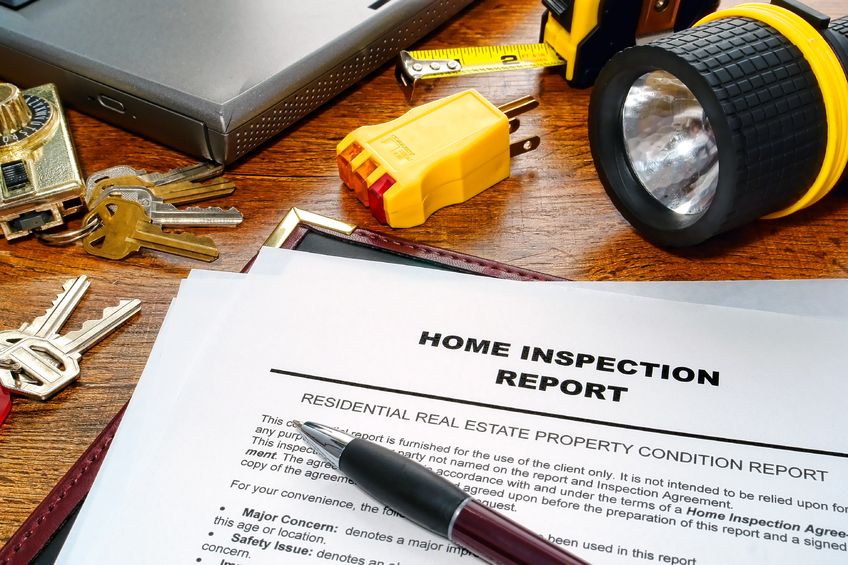
In a typical real estate transaction, it is the buyer who arranges and pays for the home inspection. However, it can be to a seller’s advantage to pay to have an inspection done prior to placing their home on the market. A pre-listing inspection can provide them with valuable information about the condition of their property and an idea of repairs that they may (or may not) wish to have done. This information can help in negotiating the sales price of the home as well as avoid having these repair issues surface down the road at a less opportune time.  

Is there any difference between a pre-listing inspection and a buyer’s inspection?
The only difference is who (seller or buyer) is having the inspection done and the point in time when the inspection occurs. The scope of the inspection, whether done pre-listing or after the sales price and terms have been agreed upon, will essentially be the same focusing primarily on proper functionality of all major systems and components of the house: heating and cooling, electrical, plumbing, roof and structure, siding, doors, and windows.

Typically, how much does it cost for a pre-listing inspection?
The fee is usually the same as the buyer’s inspection, generally ranging from $350 to $500 for a qualified inspector who carries errors and omissions insurance. The price can vary based on location, square footage, age of the home, and any special conditions.

Why should a seller consider doing pre-listing inspection?
Keep in mind that whether a seller has a pre-listing inspection or not, the buyer may still choose to have their own inspection done. What a pre-listing inspection does is give the seller a chance to resolve any repair issues up front that are likely to surface in the buyer’s inspection or have them accounted for in the asking price. This not only places the seller in a better negotiating position but helps minimize the chance of having to deal with circumstances that may come up in the buyer’s inspection that is done after the sales price and terms have been negotiated.

What should the seller do if a pre-listing inspection uncovers major problems?
Generally, it is better to know about inspection issues early rather than to be blindsided at a later date. Once identified, they can be assessed for proper resolution. A seller shouldn’t automatically assume that everything needs to be fixed prior to placing the home on the market. A REALTOR® can advise them as to which repairs are likely to negatively affect the sale of their home.

If you’re looking for more information about buying or selling your home, Three Rivers Association of REALTORS® can help. Visit our website today to learn more and to find one of our members who can help you!

Wednesday, December 27, 2017

Tax Records: What to Save and for How Long

Curious about how long you should hold on to your tax records after filing? A Dona Dizube over at House Logic details why holding on to those pesky documents can save you from future headaches in her article below.
Tax Filings

How Long to Keep Tax Records
By Dona Dizube
The federal tax law signed by President Donald Trump Dec. 22, 2017, may affect home ownership tax benefits described in this article. The new law goes into effect for the 2018 tax year and generally doesn’t affect tax filings for the 2017 tax year. In 2018, HouseLogic will be providing information on the tax provisions affecting home ownership. In the meantime, here’s a detailed summary of the changes.
Unless you’re living in the 123-room Spelling Manor, you probably don’t have space to store massive amounts of tax and insurance paperwork, warranties, and repair receipts related to your home.
But you’ll definitely want your paperwork at hand if you have to prove you deserved a tax deduction, file an insurance claim, or figure out if your busted oven is still under warranty.
To help you prioritize your paperwork, we’ve created a hand “How Long to Keep It” home records checklist.

First, a little background on IRS rules, which informed some of our charts:
  • The IRS says you should keep tax returns and the paperwork supporting them for at least three years after you file the return — the amount of time the IRS has to audit you. So that’s how long we advise in our charts.
  • Check with your state about state income tax, though. Some make you keep tax records a really long time: In Ohio, it’s 10 years.
  • The IRS can also ask for records up to six years after a filing if they suspect someone failed to report 25% or more of his gross income. And the agency never closes the door on an audit if it suspects fraud. Just sayin’.

HOME SALE RECORDS
DocumentHow Long to Keep It
Home sale closing documents, including closing statementAs long as you own the property + 3 years
Deed to the house
As long as you own the property
Builder’s warranty or service contract for new home Until the warranty period ends
Community/condo association covenants, codes, restrictions (CC&Rs)As long as you own the property
Receipts for capital improvementsAs long as you own the property + 3 years
Section 1031 (like-kind exchange) sale records for both your old and new properties, including HUD-1 settlement sheetAs long as you own the property + 3 years
Mortgage payoff statements (certificate of satisfaction or lien release)Forever, just in case a lender says, “Hey, you still owe us money.”
Why you need these docs: You use home sale closing documents, receipts for capital improvements, and like-kind exchange records to calculate and document your profit (gain) when you sell your home. Your deed and mortgage payoff statements prove you own your home and have paid off your mortgage, respectively. Your builder’s warranty or contract is important if you file a claim. And sooner or later you’ll need to check the CC&R rules in your condo or community association.

ANNUAL TAX DEDUCTIONS
DocumentHow Long to Keep It
Property tax payment (tax bill + canceled check or bank statement showing check was cashed)3 years after the due date of the return showing the deduction
Year-end mortgage statements3 years after the due date of the return showing the deduction
PMI payment (monthly bills + canceled check or bank statements showing check was cashed)3 years after the due date of the return showing the deduction
Residential energy tax credit* receipts3 years after the due date of the return on which the credit is claimed (including carryforwards**)
Why you need these docs: To document you’re eligible for a deduction or tax credit.
*Energy tax credits ($500 lifetime cap) for such things as energy-efficient windows, doors, heating and cooling systems, insulation, and more.
**Tax credits that you carry forward from one year to a future year, such as when you don’t have enough tax liability to offset the entire amount of the credit. (You can’t deduct more than you earn.) Only certain tax credits can be carried forward. Check with your tax pro about your particular circumstances.

INSURANCE AND WARRANTIES
DocumentHow Long to Keep It
Home repair receiptsUntil warranty expires
Inventory of household possessionsForever (Remember to make updates.)
Homeowners insurance policiesUntil you receive the next year’s policy
Service contracts and warrantiesAs long as you have the item being warrantied
Why you need these docs: To file a claim or see what your policy or warranty covers.

INVESTMENT (LANDLORD) REAL ESTATE DEDUCTIONS
DocumentHow Long to Keep It
Appraisal or valuation used to calculate depreciationAs long as you own the property + 3 years
Receipts for capital expenses, such as an addition or improvementsAs long as you own the property + 3 years
Receipts for repairs and other expenses3 years after the due date of the return showing the deduction
Landlord’s insurance payment receipt (canceled check or bank statement showing check was cashed)3 years after the due date showing the deduction
Landlord’s insurance policyUntil you receive the next year’s policy
Partnership or LLC agreements for real estate investmentsAs long as the partnership or LLC exists
Landlord insurance receipts (canceled check or bank statement showing check was cashed)3 years after you deduct the expense
Why you need these docs: For the most part, to prove your eligibility to deduct the expense. You’ll also need receipts for capital expenditures to calculate your gain or loss when you sell the property. Landlord’s insurance and partnership agreements are important references.

MISCELLANEOUS RECORDS
DocumentHow Long to Keep It
Wills and property trustsUntil updated
Date-of-death home value record for inherited home, and any rules for heirs’ use of homeAs long as you or spouse owns the home + 3 years
Original owners’ purchase documents (sales contract, deed) for home given to you as a giftAs long as you or spouse owns the home + 3 years
Divorce decree with home sale clauseAs long as you or spouse owns the home + 3 years
Employment records for live-in help (W-2s, W-4s, pay and benefits statements)4 years after you make (or owe) payroll tax payments
Why you need these docs: Most are needed to calculate capital gains when you sell. Employment records help prove deductions.

Organizing Your Home Records

Because paper, such as receipts, fades with time and takes up space, consider scanning and storing your documents on a flash drive, an external hard drive, or a cloud-based remote server. Even better, save your documents to at least two of these places.
Digital copies are OK with the IRS as long as they’re identical to the originals and contain all the accurate information that was in the original receipts. You must be able to produce a hard copy if the IRS asks for one.
Tip: Tax season and year’s end are good times to purge files and toss what you no longer need; that’s often when the spirit of organization moves us.
When you do finally toss out your home-related paperwork, use a shredder. Throwing away intact documents with personal financial information puts you at risk for identity theft.
This article was written by Dona Dizube on behalf of House Logic. The article provides general information about tax laws and consequences, but isn’t intended to be relied upon as tax or legal advice applicable to particular transactions or circumstances. 
If you're looking for further advice or information when it comes to tax documentation as a home owner, Three Rivers Association of Realtors is here to help. Contact us today!

Friday, November 10, 2017

Study Finds Majority of Today's Home Buyers are Millennials

A report entitled “2017 National Association of REALTORS® Home Buyer and Seller Generational Trends” states that, over the past four years, one consistent finding has been that Millenials/Gen Y-ers or those age 36 and younger make up the largest share of home buyers at 34 percent. Half of them were first time buyers. The report showed that this group has been quite traditional in their buying habits opting for suburban detached single family homes.

millennial homebuyers

The next largest group was Gen Xers or those age 37 to 51 who make up 28 percent of home buyers. They are the most ethnically and racially diverse group as 21 percent identified their race as something other than White/Caucasian. And, because generally they are in their peak earning years, they purchased larger homes in terms of median square footage and number of bedrooms.

Baby Boomers were split into two groups due to differing demographics and buying behaviors. Younger baby boomers identified as those age 52 to 61 make up 16 percent of buyers and older baby boomers age 62 to 70 make up 14 percent. Younger baby boomers are most likely to buy a multi-generation home to take care of aging parents, for cost savings and because children over the age of 18 are moving back. The report also indicates that this group projects that they will remain in their home the longest at 20 years. Buyers 71 to 91, referred to in the report as the Silent Generation, represent the smallest share of home buyers at 8 percent. Nearly one quarter of these buyers purchased senior-related housing.

The study also revealed that 88 percent of all home buyers financed their home purchase… a share that decreases as the age of the buyer increases. Home ownership remains among life’s priorities for most Americans. For all three groups under the age of 61, the main reason given for purchasing was the desire to own a home of their own. The household composition for buyers in all age groups was primarily married couples followed by single females, single males, and unmarried couples.

The report also pointed out that it is a continued trend among all generations of buyers to consult a real estate agent or broker to help them buy or sell their home. Buyers need the help of a real estate professional to help them find the right home, negotiate terms of sale, and help with price negotiations. Sellers, as well, turn to professionals to help market their home to potential buyers, sell within a specific timeframe, and price their home competitively. To learn more, Three Rivers Association of Realtors is here to help. Visit our website or call us at 815-744-4520

Sources:
https://www.nar.realtor/sites/default/files/reports/2017/2017-home-buyer-and-seller-generational-trends-03-07-2017.pdf